



“We do not learn from experience... we learn from reflecting on experience.” — John Dewey
I named this space MotionMic. because I do my best thinking on the move.
Walking, pacing, driving, standing in line at the grocery store with a thought crystallizing faster than I can thumb-type it into my phone.
The microphone is literal — voice-to-text dictation is how most of my raw ideas enter my system. I open an app, hit record, speak a reflection, and a rough note lands in my digital inbox. Later, sitting at a desk, I clean it up, connect it to other notes, and eventually it becomes part of a manuscript or an article, resource, or some other line of inquiry.
Call it an inroad.
That is the design. The reality, lately, has been something different. I spent an entire day last week at a computer. Not writing. Not thinking. Not producing anything a reader would ever see. I was rebuilding the infrastructure underneath my notes — the filing system, the backup system, the security configuration, the automation scripts. I was working ON the workshop instead of IN it.

There is a well-known tension in the personal knowledge management community between these two modes.
Working IN your system means capturing ideas, writing, linking concepts, producing output. Working ON your system means designing templates, reorganizing folders, configuring plugins, debugging automation. The first mode is why the system exists. The second mode is what keeps it functional. And the gravitational pull of the second mode is powerful, because it feels productive without requiring you to face the blank page.
The paradox was not lost on me: the entire point of my workflow is to spend less time at a desk.

The Bridge-Building Day
David Allen argued that the mind is for having ideas, not holding them. Tiago Forte extended this to knowledge work: your notes constitute an external thinking system, organized by actionability. Both frameworks assume the infrastructure works. Mine stopped working when a dictated note could not be found because the tools assumed a naming convention the note did not follow.
This is the gap between capture and formalization. When you dictate on the move, you name things intuitively. When you search later, you search systematically. If nothing bridges those two conventions, things fall through.
Here is one bridge I built after the breakdown.
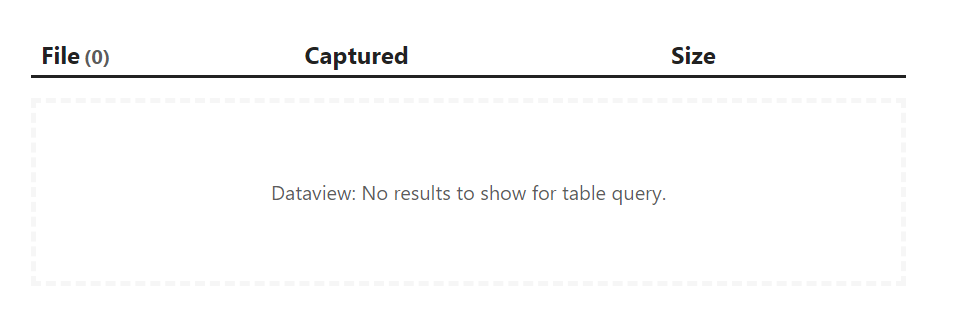
This Obsidian Dataview query surfaces every note in your Inbox that has been sitting unfiled for more than 7 days — the ones most likely to drift into invisibility:
dataviewTABLE file.ctime AS "Captured", file.size AS "Size"
FROM "01INBOX"
WHERE (date(today) - file.ctime).days > 7
SORT file.ctime ASC
If you run that and the list is long, you have a formalization backlog. That is where notes go to die. When it works well it lists all disorganized notes for the past seven days:
Allen describes having a “Mind Like Water” to invoke the idea of flow (see Tim Ferriss’s interview with Allen, here).
Its refers to optimizing a state of ‘flow’
The problem is developing the infrastructure that allow my work to flow effortlessly regardless to whether I’m walking, talking, or sat at my desk.
You Cannot Dictate a Backup Script
The uncomfortable truth about mobile-first knowledge work: the infrastructure that supports mobility is itself deeply stationary work.
You cannot dictate a backup script.
You cannot configure version control while walking. You cannot debug a security boundary on a phone screen. At least, as far as I can tell — AI may soon prove me wrong.
For the time being, you can make the stationary work as small as possible.
Here is the nightly auto-commit script I now run at 11 PM via Windows Task Scheduler. It takes five minutes to set up and never needs attention again:
